Table of Contents
ToggleFinding roaches scuttling across your patio or hiding under mulch isn’t just unsettling, it’s a warning sign. Outdoor roach populations don’t stay outside. They migrate toward moisture, food, and shelter, which means your home’s perimeter becomes the frontline. This guide walks through proven methods for eliminating outdoor roaches using the right products, application techniques, and long-term prevention strategies that actually work.
Key Takeaways
- Outdoor roaches are attracted to moisture, organic debris, and hiding spaces near your home’s foundation, making perimeter treatment essential for preventing indoor infestations.
- Granular insecticides provide 60-90 days of residual protection with slow-release pyrethroids, while liquid outdoor roach killer sprays deliver faster knockdown within hours and penetrate cracks more effectively.
- Proper application of outdoor roach killer requires identifying high-activity zones at dusk, clearing debris, spraying or spreading products in 5-10 foot bands around foundations, and monitoring treated areas weekly for effectiveness.
- Natural methods like food-grade diatomaceous earth and essential oil sprays offer supplemental control but work best as part of an integrated approach for light infestations or prevention.
- Preventing future roach invasions requires eliminating moisture sources, managing mulch depth, sealing foundation cracks with caulk, and conducting monthly property inspections during warm months to catch early activity.
Why Outdoor Roaches Are Invading Your Property
Outdoor roaches, primarily American, Oriental, and Smokybrown species, aren’t just looking for a warm spot. They’re drawn to environments that offer three things: moisture, organic debris, and hiding places.
Leaky hose bibs, clogged gutters, and standing water in plant saucers create ideal breeding grounds. Roaches can reproduce rapidly in damp mulch, leaf litter, and compost piles. A single female American roach can produce 150 offspring per year.
Wood piles stacked against the foundation, overgrown shrubs touching siding, and gaps around utility penetrations give roaches direct access to your home’s envelope. They don’t need much, a crack as thin as 1/16 inch is enough for a nymph to squeeze through.
Garbage cans without tight lids, pet food left outside, and fallen fruit from trees provide consistent food sources. Even grass clippings and decomposing plant matter attract them. Understanding these attractants helps homeowners target the root cause instead of just treating symptoms.
Types of Outdoor Roach Killers: Which One Works Best?
Choosing the right outdoor roach killer depends on the infestation level, application area, and how quickly results are needed. Two main categories dominate the market: granular insecticides for residual control and liquid sprays for immediate knockdown.
Granular Insecticides for Long-Lasting Control
Granular products contain slow-release active ingredients, commonly bifenthrin, lambda-cyhalothrin, or deltamethrin, embedded in small pellets. These pyrethroids disrupt the nervous system of roaches on contact or ingestion.
Apply granules in a 5- to 10-foot band around the foundation perimeter, under decks, along fence lines, and in mulched beds. Water-activated formulas require light irrigation after application to release the insecticide into the soil and surface layer.
Granular treatments provide 60 to 90 days of residual protection when applied correctly. They work well in areas with heavy ground cover or ornamental beds where liquid sprays might wash away or damage plants. Look for products labeled for outdoor perimeter use and safe for use around lawns.
One downside: granules don’t provide instant results. Roaches need to contact or ingest the product, which can take 24 to 48 hours for full effect.
Liquid Sprays for Immediate Results
Liquid insecticides deliver faster knockdown. Active ingredients like cypermethrin, permethrin, or imidacloprid (a neonicotoid) kill roaches within minutes to hours of contact.
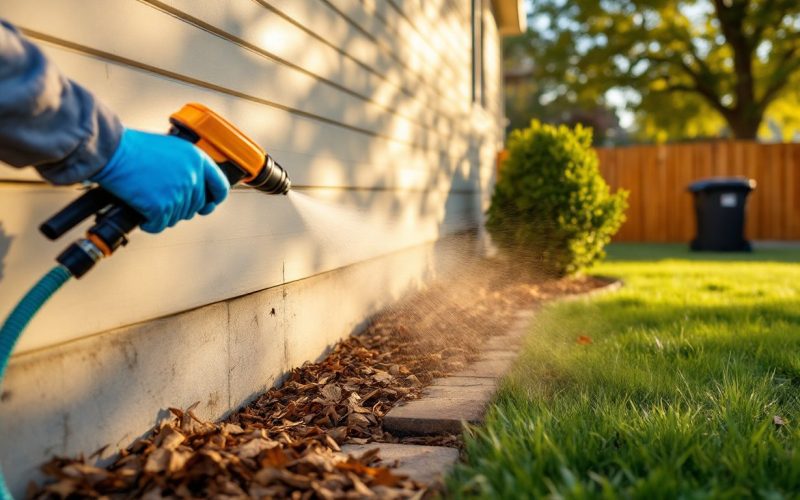
Mix concentrated liquid formulas in a pump sprayer or hose-end applicator according to label directions, typically 0.5 to 1 ounce per gallon of water. Spray foundation walls up to 3 feet high, around doorways, window frames, utility boxes, and underneath siding edges where roaches hide.
Liquid treatments penetrate cracks and crevices better than granules, making them ideal for hard surfaces like concrete patios, stone walkways, and exterior walls. Reapply every 30 to 60 days or after heavy rain, as water degrades residual effectiveness.
Always wear nitrile gloves, safety glasses, and long sleeves when mixing and applying liquid insecticides. Keep children and pets off treated surfaces until fully dry, usually 2 to 4 hours depending on humidity.
How to Apply Outdoor Roach Killer Effectively
Application technique matters as much as product choice. Sloppy coverage leaves gaps where roaches continue to thrive.
Step 1: Identify High-Activity Zones
Inspect your property at dusk using a flashlight. Roaches are nocturnal, so evening checks reveal where they’re hiding. Common hotspots include under outdoor trash cans, behind downspouts, inside meter boxes, and beneath stacked firewood.
Step 2: Clear Debris and Trim Vegetation
Rake up leaf litter, pull weeds, and trim shrubs at least 12 inches away from the foundation. Remove objects in direct contact with siding, firewood, ladders, boxes, to eliminate harborage.
Step 3: Apply Product According to Label
For granules, use a broadcast or drop spreader for even distribution. Avoid piling product in one spot. For liquids, start at the farthest point and work backward to avoid walking through wet insecticide. Focus on cracks, expansion joints, and the soil-to-foundation transition.
Step 4: Water In (If Required)
Some granular products need 0.25 to 0.5 inches of water to activate. Use a sprinkler or light hose spray. Check the product label, watering too soon or too much can reduce effectiveness.
Step 5: Monitor and Reapply
Check treated areas weekly for roach activity. Successful treatment should show a sharp decline within 7 to 10 days. Reapply according to the label schedule, typically every 30 to 90 days depending on product type and weather.
Never apply insecticides before rain or when temperatures exceed 85°F, as heat accelerates chemical breakdown and reduces residual time.
Natural and DIY Outdoor Roach Control Methods
For homeowners who prefer non-chemical approaches or need to supplement conventional treatments, several natural methods offer moderate effectiveness.
Diatomaceous Earth (DE): Food-grade DE is a fine powder made from fossilized algae. It damages the waxy exoskeleton of roaches, causing dehydration. Apply a thin layer in dry areas under decks, inside crawl spaces, and along foundation cracks. DE loses effectiveness when wet, so reapply after rain.
Boric Acid Dust: Though technically a chemical, boric acid is low-toxicity to humans and pets when used correctly. Dust it lightly into wall voids, under siding edges, and inside outdoor electrical boxes. Roaches ingest it while grooming, and it disrupts their digestive system. Wear a dust mask during application.
Essential Oil Sprays: Peppermint, eucalyptus, and tea tree oils act as mild repellents. Mix 10 to 15 drops per cup of water with a few drops of dish soap (to help oils mix). Spray around entry points and outdoor seating areas. Reapply every few days. This won’t eliminate an infestation but can deter scouts.
Bait Stations: Homemade bait using boric acid, sugar, and water can be effective, but commercial gel baits like those used in roach elimination strategies often work better due to optimized attractants. Place bait stations under rocks, inside meter boxes, and along fence lines, not in open areas where rain will dissolve them.
Natural methods work best as part of an integrated approach. They’re not as fast or reliable as synthetic insecticides for heavy infestations, but they’re useful for prevention and light control.
Preventing Future Roach Infestations in Your Outdoor Spaces
Killing roaches is only half the job. Without prevention, they’ll return within weeks.
Eliminate Moisture Sources: Fix leaking outdoor faucets, clear clogged gutters, and ensure downspouts discharge at least 6 feet from the foundation. Empty plant saucers daily and avoid overwatering landscaping.
Manage Organic Debris: Don’t let mulch exceed 2 to 3 inches deep, and keep it at least 6 inches away from siding. Rake leaves regularly. If composting, use a sealed bin at least 20 feet from the house.
Seal Entry Points: Inspect the foundation and exterior walls for gaps. Use polyurethane or silicone caulk around utility penetrations, expansion joints, and where different building materials meet. Install door sweeps on exterior doors, roaches often enter under the gap at the bottom.
Store Firewood Properly: Stack wood on a raised rack at least 20 feet from the house. Don’t bring large quantities indoors at once. Roaches and egg cases hide in bark crevices.
Control Outdoor Lighting: Roaches are attracted to certain light wavelengths. Use yellow or sodium vapor bulbs for outdoor fixtures near entries, as these are less attractive to insects. Keep lights off when not needed.
Regular Inspections: Walk your property monthly, especially in warmer months (May through October in most of the U.S.). Early detection prevents small problems from becoming full infestations. Homeowners who maintain their seasonal outdoor spaces tend to have fewer pest issues overall.
Coordinate Indoor and Outdoor Treatment: Treating only the yard while ignoring indoor prevention is like bailing water from a leaking boat. Seal pantry goods in airtight containers, fix plumbing leaks, and maintain a consistent cleaning routine. Many effective prevention methods apply to both indoor and outdoor environments.
Consistency matters more than intensity. A well-maintained property with quarterly treatments and monthly inspections will stay roach-free far longer than a neglected yard hit with heavy pesticides once a year.