Table of Contents
ToggleNaples homeowners know the value of outdoor living. With year-round sunshine and evening temperatures that hover around perfect, it makes sense to extend the home’s footprint beyond four walls. An outdoor kitchen isn’t just a luxury, it’s a practical addition that transforms how families entertain, cook, and spend time together. From casual weeknight grilling to hosting weekend gatherings, a well-designed outdoor kitchen handles Florida’s heat, humidity, and afternoon thunderstorms while adding real value to a property. This guide covers what Naples homeowners need to know about materials, layouts, permits, and whether to DIY or call in the pros.
Key Takeaways
- An outdoor kitchen in Naples adds practical value by reducing indoor cooling costs while returning 60-70% of installation costs at resale in this high-demand market.
- Marine-grade stainless steel (316-grade), sealed granite, porcelain tile, and HDPE cabinetry are essential materials that withstand Florida’s UV exposure, salt air, humidity, and temperature swings.
- Outdoor kitchen designs should complement Naples’ Mediterranean, coastal contemporary, or Florida ranch architectural styles through coordinated color schemes, materials, and hardware finishes.
- Most outdoor kitchens require permits for electrical, plumbing, and gas work; setback distances of 10 feet from property lines apply, and roofed structures over 200 square feet need engineer-stamped plans.
- Budget ranges from $5,000-$8,000 for basic setups to over $50,000 for high-end installations; utilities add $2,300-$5,700 separately, and professional crews complete mid-sized projects in 2-4 weeks.
- Gas line and electrical installation, plumbing work, and structural elements must be handled by licensed professionals to ensure code compliance and safety; homeowners can DIY tile work, paver installation, and landscape lighting.
Why Naples Homeowners Are Investing in Outdoor Kitchens
Naples real estate consistently ranks among Florida’s strongest markets, and outdoor kitchens have become a key selling feature. Homes with dedicated outdoor cooking spaces often see higher appraisal values and shorter time on market compared to similar properties without them.
The practical benefits matter more. Indoor kitchens heat up fast when you’re running an oven or stovetop in July. Moving the cooking outside keeps air conditioning costs lower and the main living space comfortable. It’s not just about summer, either, Naples winters are mild enough that outdoor kitchens get used nearly year-round.
Entertainment habits have shifted, too. Instead of formal dining rooms, families gather around outdoor islands, prep stations, and built-in grills. The outdoor kitchen becomes the hub, not an afterthought. Many homeowners report using their outdoor space more than their indoor kitchen during cooler months.
From a resale perspective, outdoor kitchens appeal to buyers looking for move-in-ready homes. According to recent data, outdoor cooking spaces can return 60-70% of installation costs at resale in high-demand markets like Naples. That’s comparable to minor kitchen remodels and better than many cosmetic upgrades.
Essential Elements of a Naples Outdoor Kitchen
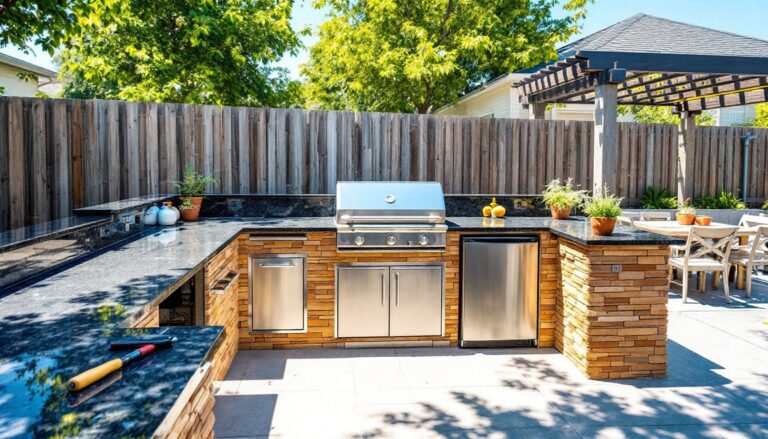
A functional outdoor kitchen needs more than a grill on a patio. Start with the cooking surface, built-in grills offer better heat control and durability than portable models. Gas grills connect to natural gas lines or propane tanks: gas lines require a licensed plumber and permit, but eliminate tank swaps.
Counter space is critical. Plan for at least 36 inches on either side of the grill for prep and plating. Granite, concrete, and tile all work well, but avoid materials that absorb moisture or crack under temperature swings. Stainless steel cabinets resist rust better than powder-coated steel, which can chip and corrode in salt air.
Storage matters more than most homeowners expect. Keep grilling tools, propane igniters, and cleaning supplies close to the cooking area. Marine-grade stainless steel (316-grade) holds up better than standard 304-grade in coastal zones. If the property is within a few miles of the Gulf, it’s worth the upgrade.
Refrigeration extends the kitchen’s usefulness. Outdoor-rated refrigerators withstand humidity and temperature fluctuations that would kill an indoor unit in months. Look for models with sealed compressors and weatherproof gaskets.
A sink with hot and cold water makes cleanup easier and reduces trips inside. This requires plumbing and drainage, which means permits in most cases. Pair it with a garbage disposal if local code allows, or plan for a compost or waste container nearby.
Weather-Resistant Materials for Florida’s Climate
Florida’s climate demands materials that handle intense UV exposure, humidity, salt air, and heavy rain. Porcelain tile and natural stone work well for countertops and flooring, they don’t fade, warp, or crack from moisture. Sealed granite is a top choice for counters: it resists staining and handles hot pans.
Marine-grade stainless steel (316-grade) is the go-to for appliances, cabinet frames, and hardware. It resists pitting and corrosion far better than standard stainless. Avoid aluminum unless it’s powder-coated and regularly maintained: salt air eats through it quickly.
For cabinetry, high-density polyethylene (HDPE) and polymer materials outperform wood, even treated lumber. Wood swells, rots, and requires constant sealing in Naples humidity. HDPE won’t warp, fade, or crack, and it doesn’t need refinishing.
Concrete countertops are gaining traction, they’re heat-resistant, customizable, and durable. Seal them properly with a penetrating sealer rated for outdoor use, and reseal annually. Poorly sealed concrete will stain from grease and acidic marinades.
Roofing over the kitchen extends its lifespan. A pergola with louvered panels or a solid roof keeps rain off appliances and counters. Aluminum or vinyl structures resist rust and rot better than wood. If using wood, choose pressure-treated lumber rated for ground contact (#2 grade Southern Yellow Pine or better) and apply a UV-resistant sealant every 18-24 months.
Design Styles That Complement Naples Architecture
Naples homes lean toward Mediterranean, coastal contemporary, and classic Florida ranch styles. Outdoor kitchens should echo that aesthetic, not clash with it.
Mediterranean designs feature stucco finishes, arched openings, and tile accents. Use warm earth tones, terracotta, beige, and cream, paired with wrought iron or bronze hardware. Clay or cement tile roofing over the kitchen ties into the main house. Stone or tile counters in muted shades work better here than bright white or black.
Coastal contemporary goes lighter and cleaner. Think white or pale gray cabinetry, stainless appliances, and simple lines. Quartzite or light granite counters pair well with this style. Avoid heavy ornamentation: keep hardware minimal and stick to brushed nickel or stainless finishes.
Florida ranch styles use natural wood tones, brick, and horizontal lines. If the home has exposed wood beams or board-and-batten siding, carry that into the outdoor kitchen with cedar or cypress accents (sealed properly). Brick veneer on the grill surround or backsplash ties the space to older Florida homes.
Landscaping around the kitchen matters, too. Tropical plantings, palms, bird of paradise, and bougainvillea, soften hardscape and provide natural shade. Avoid planting directly against stainless or stone: root systems and constant moisture cause damage over time. Designers featured on garden planning sites often recommend leaving at least 18 inches of clearance between plantings and kitchen structures.
Planning Your Outdoor Kitchen: Layout and Budget Considerations
Start with the work triangle concept, grill, sink, and prep area should form a triangle with sides roughly 4 to 9 feet apart. This minimizes steps during cooking and keeps the workflow efficient. If adding a refrigerator, place it near the prep counter, not next to the grill (heat shortens compressor life).
L-shaped layouts work well on covered patios or against exterior walls. One leg holds the grill and side burners: the other has the sink, storage, and prep space. This setup leaves the front open for seating or foot traffic.
Island layouts suit larger yards and create a central gathering spot. Place the grill in the center or at one end, with counter space wrapping around. Include bar seating on the opposite side so guests face the cook. Islands need clearance on all sides, allow at least 42 inches of walkway space.
Galley or linear layouts fit narrow spaces. Line up grill, prep counter, and sink along one wall or fence line. This uses less square footage but limits the number of people who can work in the space at once.
Budget varies widely depending on materials and scope. A basic setup, small built-in grill, minimal counter space, no plumbing, starts around $5,000 to $8,000 for materials if you’re doing the labor. Mid-range projects with plumbing, refrigeration, and higher-end finishes run $15,000 to $30,000. High-end installations with custom stonework, premium appliances, and extensive electrical and gas work can exceed $50,000. These are rough figures: Naples labor rates and material costs fluctuate with demand and supply chains.
Don’t skip the utilities budget. Running a gas line costs $500 to $1,200 depending on distance from the meter. Electrical work for outlets, lighting, and appliances runs $800 to $2,000 for a typical setup. Plumbing for a sink, including drainage, adds another $1,000 to $2,500. Homeowners who prioritize outdoor living upgrades often find that planning for utilities early avoids costly change orders.
Permits and Regulations in Naples
Most outdoor kitchens in Naples require permits. Electrical work, gas lines, and plumbing all fall under Collier County building codes, which align with the Florida Building Code (FBC). Running these systems without permits can void homeowners insurance and complicate future sales.
Permit costs vary by project scope. A basic electrical permit might run $100 to $200, while a combined permit for electrical, plumbing, and gas work can reach $500 or more. Processing time is typically two to four weeks, so factor that into the schedule.
Setback requirements apply, outdoor kitchens must be a certain distance from property lines, usually 10 feet from the rear and side lines in most Naples residential zones. Verify with the county: HOAs sometimes impose stricter setbacks.
If the kitchen includes a roof structure over 200 square feet, it may need engineered plans stamped by a Florida-licensed professional engineer (PE). Wind load calculations matter in coastal zones: structures must withstand 140+ mph winds per the FBC’s High Velocity Hurricane Zone (HVHZ) requirements.
Gas appliances must be installed by a licensed contractor, and inspections are required before covering any gas lines. CSST (corrugated stainless steel tubing) is common for gas runs: it’s flexible and easier to route than black iron pipe, but must be bonded per NEC (National Electrical Code) Article 250 to prevent lightning damage.
Call 811 before any digging. Utility locates are free and prevent hitting underground lines, which can result in fines, repair costs, and serious injury.
DIY vs. Professional Installation: What Naples Homeowners Should Know
Some outdoor kitchen work is DIY-friendly: some isn’t. Assess skills honestly and know where code requires a licensed pro.
DIY-friendly tasks include assembling prefabricated cabinetry, setting pavers or tile (non-structural), installing a countertop on an existing base, and running low-voltage landscape lighting. Homeowners comfortable with masonry can build a grill surround using concrete block and stone veneer, though this takes time and precision.
Leave to the pros: gas line installation, electrical work beyond simple plug-in appliances, plumbing (especially drainage), and any structural work like roofs or posts. Naples contractors specializing in outdoor kitchen installations handle permits, inspections, and code compliance, which saves headaches down the line.
Electrical and gas work isn’t just about skill, it’s about liability and safety. Improperly installed gas lines leak: faulty electrical can start fires. Both require inspections, and inspectors will red-tag DIY work that doesn’t meet code.
Hiring a general contractor makes sense for full builds. They coordinate subs (electrician, plumber, mason), pull permits, and manage the schedule. Expect to pay 15-20% of total project cost for GC services. That markup covers insurance, scheduling, and accountability.
Hiring subs directly can save money but requires homeowners to manage timelines, inspections, and potential conflicts between trades. If the electrician and plumber both need access to the same wall cavity on the same day, someone has to sort it out.
For those tackling portions themselves, rent or buy the right tools. A wet saw is essential for cutting porcelain or stone tile cleanly: rentals run about $60-$80 per day. A compact excavator (mini excavator) speeds up trenching for utilities: expect $250-$350 per day to rent. Homeowners who enjoy outdoor projects often invest in quality tools that serve multiple projects over time.
Safety gear is non-negotiable. Wear safety glasses when cutting tile or stone, hearing protection when using saws or hammer drills, and heavy-duty gloves when handling rough materials. Dust masks or N95 respirators are necessary when cutting concrete, stone, or pressure-treated lumber. Florida heat compounds fatigue, work early morning or late afternoon, stay hydrated, and don’t push through heat exhaustion.
Timeline expectations: a professional crew can complete a mid-sized outdoor kitchen in two to four weeks, including permits and inspections. DIY projects stretch longer, expect six to ten weekends if working alone and learning as you go. Factor in material delivery delays and inspection wait times.