Table of Contents
ToggleAn outdoor kitchen extends your living space, but adding a TV takes it to another level. Whether you’re hosting game day gatherings or want background entertainment while grilling, mounting a screen in your outdoor cooking area creates a true backyard hub. It’s not as simple as dragging your living room flat-screen outside, though. Weatherproofing, proper placement, electrical codes, and layout all factor into a successful install. This guide walks through what you need to know, from choosing the right TV to mounting it safely and designing your space around it.
Key Takeaways
- An outdoor kitchen with TV transforms your backyard into a year-round entertaining hub that keeps guests engaged and can increase your home’s resale value.
- Outdoor-rated TVs with IP55+ ratings are essential for durability; standard indoor models will fail due to moisture and temperature exposure, while weatherproof cabinet enclosures offer a more affordable alternative.
- Mount your outdoor TV on a perpendicular wall away from direct grill heat at eye level (42-48 inches for seated viewers, 54-60 inches for standing), and test the location for glare at different times of day.
- Your outdoor kitchen layout should integrate the TV into island or L-shaped configurations while maintaining clear traffic flow without blocking access to cooking zones, storage, or appliances.
- All outdoor TV installations must use GFCI-protected outlets on dedicated 20-amp circuits with weatherproof in-use covers, plus stainless steel mounting hardware secured to studs or rated concrete anchors per electrical codes.
- Plan for weatherproof audio with outdoor-rated speakers, dimmable LED lighting to reduce screen glare, and protective covers or motorized cabinets to shield your TV from elements during off-season months.
Why Add a TV to Your Outdoor Kitchen?
The main draw is obvious: entertainment while cooking and hosting. But there are practical reasons beyond watching the playoffs.
First, a TV keeps guests engaged in your outdoor space instead of drifting inside. It anchors the area and gives people a reason to linger at the bar or around the grill island. For families, it means parents can cook while kids stay entertained nearby.
Second, it elevates the functionality of your space. Outdoor kitchens already handle meal prep and dining: adding a screen turns them into genuine outdoor rooms. Many homeowners who invest in outdoor entertaining setups find that a TV makes the space usable year-round, not just during cookouts.
Third, it adds resale value. Buyers looking at homes with outdoor kitchens expect modern conveniences. According to designers at Houzz, built-in TVs rank among the top specialty features in high-end outdoor kitchens.
That said, a TV isn’t a must-have for every setup. If your outdoor kitchen sits in a tight corner or under heavy tree cover, visibility and glare become issues. And if you rarely entertain or watch TV indoors, you probably won’t use it outside either.
Choosing the Right Outdoor TV for Your Kitchen
Weatherproof vs. Regular TVs: What You Need to Know
Not all TVs survive outdoors. Standard indoor models aren’t built to handle moisture, temperature swings, or direct sunlight.
Outdoor-rated TVs are specifically engineered for exterior use. They feature sealed enclosures (typically IP55 or higher rating) that block dust and water. Internal components are temperature-resistant, often operating safely from -24°F to 122°F. Screens are brighter, 700 to 2,500 nits, to combat glare from daylight. Expect to pay roughly two to three times the price of an equivalent indoor model.
Indoor TVs with enclosures are a budget-friendly alternative. You can mount a standard TV inside a weatherproof cabinet, which protects it from rain and debris. These cabinets typically cost $300 to $1,500, depending on size and features (ventilation, lockable doors, etc.). This setup works well under a covered patio or pergola but still leaves the screen vulnerable to heat buildup and condensation.
Avoid just mounting an indoor TV outdoors without protection, even under a roof. Humidity alone degrades internal electronics and adhesives. Warranty coverage won’t apply once manufacturers detect environmental damage.
Size and Placement Considerations
Size depends on viewing distance and layout. For outdoor kitchens, most setups follow a 1:1.5 ratio, for every foot of viewing distance, you want roughly 8 inches of screen. A 55-inch TV works for seating 8 to 10 feet away: bump up to 65 inches if your seating area is 10 to 13 feet back.
Placement matters as much as size. Mount the TV where it’s visible from both the cooking area and seating zones. Avoid positioning it directly above the grill, heat and grease will damage the screen and electronics over time. Instead, mount it on a perpendicular wall or integrate it into a dedicated entertainment wall within the kitchen structure.
Consider sun angles. Test your proposed location at different times of day to check for glare. Even high-brightness outdoor TVs struggle in direct afternoon sun. If possible, position the screen facing north or install it under a deep overhang. Retractable awnings or louvered pergolas also help manage light.
Height is another factor. Mount the center of the screen at eye level when seated, typically 42 to 48 inches from the ground for patio furniture. If viewers will be standing (around a bar or grill island), raise it to 54 to 60 inches.
Designing Your Outdoor Kitchen Layout Around a TV
Your layout should support flow, not hinder it. Start by mapping your cooking zones: grill, prep surface, sink, and storage. Once those are locked in, identify where people will naturally gather.
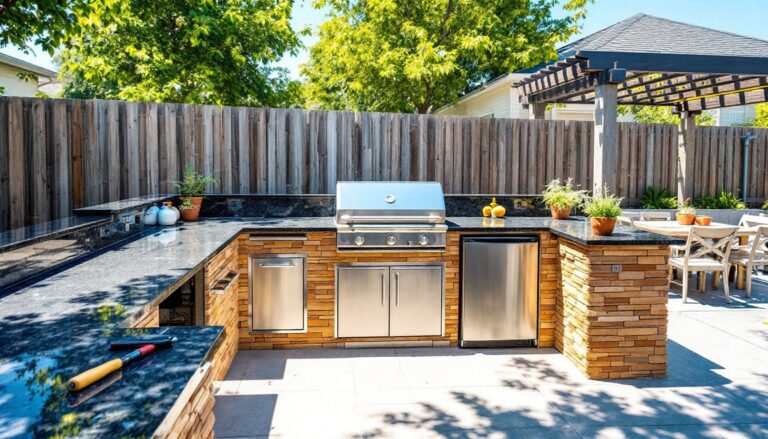
Islands and L-shaped layouts are ideal for TV integration. An island with bar seating on one side and the grill on the other creates a natural sightline for a wall-mounted screen. L-shaped kitchens work well with the TV mounted on the longer leg, angled toward seating.
Straight-line (galley) layouts are trickier. If your kitchen runs along a single wall, the TV typically mounts at one end or on a perpendicular structure like a privacy wall or fireplace surround. This keeps it visible without blocking workflow.
Incorporate the TV into a larger entertainment wall if space allows. Combine it with built-in storage, a fireplace, or open shelving for outdoor dinnerware. Many homeowners who prioritize outdoor living spaces integrate the TV into a stone or stucco feature wall, which adds structure and conceals wiring.
Traffic flow is critical. Don’t position the TV where it forces people to walk between the screen and seating. And make sure it doesn’t interfere with access to the grill, sink, or fridge.
Sound is another consideration. Outdoor spaces disperse audio quickly. Plan for external speakers or a soundbar rated for outdoor use. Some outdoor TVs include Bluetooth connectivity: pair them with weatherproof speakers mounted on pergola beams or along the patio edge for better coverage. Features like these are common in high-end outdoor kitchen designs that prioritize both cooking and entertainment.
Finally, think about lighting. If you plan to use the space at night, install dimmable lighting around the TV area. Bright overhead lights create glare on the screen: instead, use low-voltage LED strip lights under counters or along pathways to keep the area functional without washing out the picture.
Installation Essentials: Power, Mounting, and Protection
This is where prep work and code compliance matter most. Skipping steps here leads to expensive fixes, or worse, safety hazards.
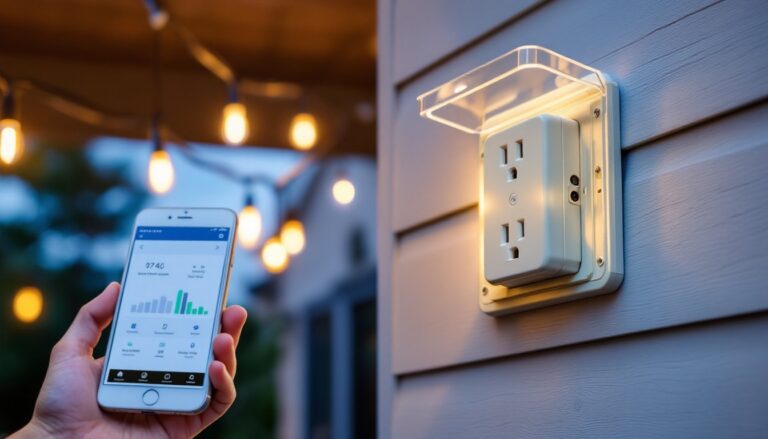
Electrical requirements come first. Outdoor TV installations require GFCI-protected outlets per the National Electrical Code (NEC). These outlets cut power instantly if moisture causes a short. Install at least one dedicated 20-amp circuit to handle the TV, soundbar, and any connected devices (streaming boxes, etc.).
Outlets should be weatherproof with in-use covers (the kind that close even with a plug inserted). Mount them within 6 feet of the TV location but not directly behind the screen, you’ll need access for troubleshooting. If your outdoor kitchen is far from your main electrical panel, you may need to run new conduit. Hire a licensed electrician for this: amateur wiring outdoors is a common code violation and insurance liability.
Mounting hardware needs to match your structure and TV weight. Most outdoor TVs weigh 40 to 80 pounds for sizes between 55 and 75 inches. Use a full-motion or tilting mount rated for outdoor use (stainless steel or powder-coated to resist rust).
If mounting to wood framing (like a pergola post or covered patio beam), secure the mount to studs using 3-inch lag bolts. For masonry or stone walls, use concrete anchors rated for the TV’s weight plus a 50% safety margin. Pre-drill pilot holes and use a level, outdoor mounts are harder to adjust once cables are routed.
Cable management keeps the install looking clean and protects wiring. Run cables through weatherproof conduit (PVC or liquid-tight flexible conduit) from the outlet to the TV. If you’re surface-mounting conduit on a finished wall, paint it to match. For new builds or renovations, run conduit inside the wall before finishing.
Connect your TV to streaming devices, cable boxes, or satellite receivers inside a weatherproof junction box or outdoor-rated media enclosure. These boxes protect connections from moisture and keep everything accessible.
Protection beyond the TV: Even outdoor-rated models benefit from covers when not in use. Soft vinyl covers ($30 to $60) shield the screen from pollen, bird droppings, and UV exposure during off-season months. If your area sees extreme weather, consider a retractable enclosure or motorized cabinet that fully conceals the TV when closed.
PPE during installation: Wear safety glasses when drilling into masonry or wood overhead. Use work gloves when handling metal brackets and conduit, and if you’re working on a ladder, have a second person stabilize it.
Permits: Some jurisdictions require electrical permits for new outdoor circuits. Check with your local building department before starting. Inspections typically focus on GFCI protection, conduit routing, and proper grounding. For homeowners expanding their at-home outdoor setups, permits ensure the work is safe and won’t cause issues during a future home sale.
Conclusion
An outdoor TV transforms a functional kitchen into a gathering hub, but it requires more planning than indoor installs. Choose a TV built for the environment, design your layout around viewing angles and workflow, and don’t cut corners on electrical work or weatherproofing. Done right, it’s a feature that pays off every time you fire up the grill.